Otoplasty
Otoplasty in Turkey
Otoplasty in Turkey, Ear Pinning Surgery, Prominent Ear Correction, Ear Surgery Cost Turkey, Otoplasty Antalya, Dr. Rehber Marşil, Cosmetic Ear Surgery.
Otoplasty in Turkey, Ear Pinning Surgery, Prominent Ear Correction, Ear Surgery Cost Turkey, Otoplasty Antalya, Dr. Rehber Marşil, Cosmetic Ear Surgery.
For many adults and children, prominent or protruding ears are a significant source of insecurity. Whether it’s avoiding ponytails, wearing hats constantly, or feeling anxious in social situations, the psychological impact can be profound.
Otoplasty in Turkey, commonly known as “Ear Pinning,” is a transformative procedure that corrects the shape, position, and proportion of the ear. It is not just about aesthetics; it is about freedom.
Dr. Rehber Marşil, operating in Antalya, performs this delicate surgery with an artistic touch. His goal is not to plaster the ears flat against the head (which looks unnatural), but to set them back to a harmonious, balanced angle that suits your facial features naturally.


What is Otoplasty (Ear Pinning)?
Otoplasty is a cosmetic procedure designed to bring ears closer to the head or reduce the size of large ears.
The Cause: Most cases of prominent ears are genetic, caused by an overdeveloped concha (the bowl of the ear) or a lack of the antihelical fold (the natural ridge of the ear).
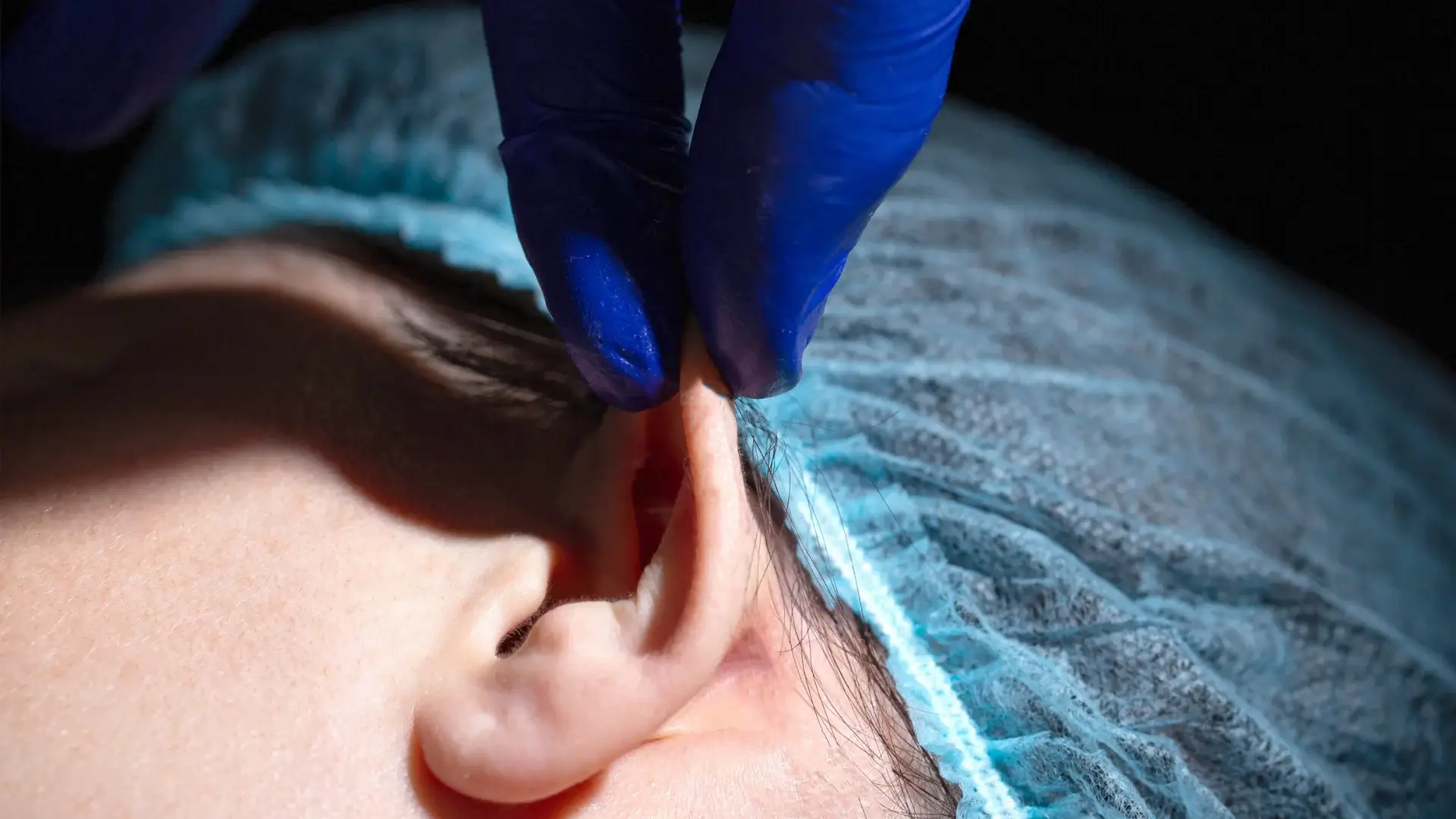
The Fix: Dr. Marşil reshapes the cartilage through a tiny incision hidden behind the ear. He creates the missing fold or reduces the excess cartilage to achieve a natural contour.
Am I a Good Candidate?
Otoplasty is unique because it is one of the few cosmetic surgeries performed on both children and adults. You may be a candidate if:
Your ears stick out far from your head.
You feel self-conscious about the size or shape of your ears.
One ear is positioned differently than the other (asymmetry).
You have suffered from teasing or bullying due to your ears.
Age: Adults of any age can have this surgery. For children, we typically recommend waiting until age 5 or 6, when ear cartilage development is nearly complete.
The Procedure: Hidden Scars, Natural Results
The fear of visible scarring is common, but with Dr. Marşil’s technique, it is unfounded.
Incision: The incision is placed behind the ear, in the natural crease where the ear meets the head.
Visibility: Once healed, the scar is virtually undetectable, even from a side view.
Technique: Dr. Marşil uses permanent internal sutures to hold the cartilage in its new shape. The skin is then closed with precision.
Stop hiding your ears. Reshape prominent ears permanently with Otoplasty. Hidden scars, natural results, and a quick recovery in Antalya.
Why Choose Antalya for Ear Surgery?
Combining this procedure with a holiday in Antalya is a popular choice for international patients.
Privacy: If you don’t want colleagues or friends to know immediately, recovering in a resort setting is ideal.
Cost & Quality: You access top-tier surgical expertise for a fraction of European prices.
Comfort: Our VIP packages handle all the logistics—from airport pickup to your hotel stay—so you can focus on relaxing.
The Procedure & Recovery
Recovery from Otoplasty is generally straightforward, but adherence to aftercare is crucial for the final shape.
What to Expect
Bandages: You will wake up with a bulky head bandage to protect the ears. This is typically removed or replaced with a lighter headband after the first check-up.
The Headband: Wearing a sports headband (like tennis players wear) is a key part of recovery to protect the ears while sleeping. Dr. Marşil will provide specific instructions on how long and when to wear this during your post-op controls.
Return to Work: Most patients feel ready to return to work or school within 5–7 days.
Final Results: While the change is immediate, minor swelling can take a few weeks to settle completely.
Frequently Asked Questions (FAQ)
01How much is otoplasty in Turkey?
Turkey is a global hub for medical tourism due to its high quality-to-price ratio. Otoplasty packages in Antalya are significantly more affordable—often 50-70% less—than in the UK, USA, or Western Europe. This price difference is due to lower local operational costs, not a compromise on medical standards. Contact us for an all-inclusive quote.
02Is otoplasty a big surgery?
No, it is considered a relatively minor cosmetic procedure. It does not involve internal organs or major muscle groups. For adults, it is often performed under local anesthesia with sedation, meaning you are relaxed but awake, and you can usually go back to your hotel the same day.
03Is otoplasty very painful?
Most patients report that Otoplasty is not very painful. The discomfort is typically described as a dull ache or throbbing sensation in the ears for the first few days, which is easily managed with oral painkillers. Severe pain is rare.
04Which country is best for otoplasty?
Turkey ranks among the top countries worldwide for Otoplasty. Turkish surgeons perform a high volume of these procedures, gaining extensive experience and expertise. Specifically, Antalya offers the added benefit of a relaxing recovery environment combined with world-class medical facilities.
05What age is best for otoplasty?
For children, the ideal age is usually between 5 and 7 years old, before they start school, to avoid potential teasing. However, it is never “too late.” A large portion of our patients are adults in their 20s, 30s, or even 50s who have wanted to fix their ears for years.
06Does otoplasty leave a scar?
Technically yes, but it is hidden. The incision is made on the back surface of the ear. Unless someone folds your ear forward and looks closely from behind, the scar is not visible. Over time, it fades to a thin, pale line.
07Can I wear glasses after otoplasty?
Wearing glasses (spectacles or sunglasses) immediately after surgery can put pressure on the healing area behind the ear. Dr. Marşil will examine you during your follow-up and let you know exactly when it is safe to resume wearing glasses based on your specific healing progress.
08What are the disadvantages of otoplasty?
Otoplasty has a very high satisfaction rate, but like all surgeries, there are considerations. Minor asymmetry between the ears is possible (as no two ears are naturally identical). In rare cases, the ears can “relapse” slightly if the internal sutures slip, which might require a minor touch-up. Numbness on the ears is common but temporary.
Ready for a Fresh Look?